
07/19/2021 Empower Hour! Gut Health

Give Arnica A chance – Dispelling Homeopathy Myths
Would you like to learn a safe, effective and inexpensive way to help people and pets heal? You are in the right place.
Arnica is an over the counter homeopathic medicine commonly used on the skin to relieve sore and aching muscles. However, possibly because of a fundamental misunderstanding about its mode of action, it is underused in its oral form.
This was made very clear by a popular podcaster who usually thinks outside the box and tests things on himself. The theme of most of his material is using the “minimum effective dose” to optimize health, lifestyle and work. Interesting stuff. Very holistic.
…he thought the dose was too small to be effective.
Yet in the case of using oral Arnica, he would not give it a chance. Ironically, this was because he thought the dose was too small to be effective.
The podcaster was correct that the oral version of Arnica is often produced in a (sub-molecular) size. Other people, and veterinarians, have voiced this concern about too small a dose. However, it is incorrect to think that the effectiveness of Arnica is based on the size of the dose.
I think the conversation needs to move away from one about dose to proof of principle based on clinical efficacy. The shift of EBM (Evidence Based Medicine) to the one that includes the other EBM of Experience Based Medicine is needed. Scientific progress is based on first open-mindedly observing a phenomenon and then explaining, describing and proving it with evidential research studies.

Science Of Arnica
Arnica is postulated to work by inducing a physiologic state similar to that seen after an injury. Natural healing mechanisms are activated to reduce symptoms like pain and swelling. The effectiveness of Arnica is not because of the dose or the form of administration.
Arnica is postulated to work by helping the body restore homeostasis (balance). Every lifestyle change and treatment that restores balance can be deeply healing. Fresh food feeding, acupuncture, Ayurveda, homeopathic medicines, etc. all do this.
Clinical studies in people have shown how effective Arnica can be after surgeries and traumas.
Natural healing methods all work with the “vis medicatrix naturae” or the healing power of nature.
The theory is that the living body has a natural tendency to achieve physiologic equilibrium when it is “nudged” in the direction of healing (balance), by medicine with subtle energies like Arnica. Over the centuries, successes with Traditional Chinese Medicine, Ayurveda, homeopathic medicines (like Arnica) have shown that maintaining and regaining equilibrium is a key to health. At the cellular level science knows that this process is powered by fuel from mitochondrial powerhouses which generate energy molecules like ATP and NAD+.
It is unfortunate that confusion over the mechanisms and principles of homeopathy are preventing the use of effective medicines like Arnica in the United States. Along with other homeopathic treatments, it is integrated in the ERs and ICUs of teaching hospitals in Germany, Switzerland, France, India, and other countries around the world.
But let’s return to the misunderstanding that this article was originally intended to help dispel. That is, the myth that homeopathic medicines like Arnica work based on tiny doses. Instead, it is the Law of Similars and symptom similarity that is the basis for homeopathy.

Efficacy of Arnica
Clinical studies in people have shown how effective Arnica can be after surgeries and traumas, yet this inexpensive and readily-available medication is not commonly used for this purpose in veterinary clinics or by pet parents.
Hundreds of years of clinical experience show that it works equally well in animals to decrease soreness, bruising, and effects of injury. Thus, Arnica fulfills the same goal as any other medication that veterinarians use, which is improved homeostasis (balance) and healing.
In my opinion, our beloved companion animals should be able to benefit from it.
For example, animals that get hit by cars might have better clinical outcomes if Animal Control Officers were permitted to start giving Arnica to them immediately upon arrival at the scene of a trauma.
Homeopathy and Quality of life
In addition to Arnica, other homeopathic medicines have been effectively used for over two hundred years for helping pets have better lives. Homeopathic medicines have been clinically and epidemiologically verified in many past outbreaks of bacteria and viruses, fatal epidemics, pneumonias, etc. Before the discovery of antibiotics, many lives were saved by homeopathic medicines during epidemics of potentially fatal infectious dis-eases like flus, pneumonia, typhoid, cholera, etc.
Perhaps that’s why the only monument in Washington DC dedicated to a medical doctor is dedicated to Dr. Samuel Hahneman, the founder of homeopathy for the many lives saved.

Let’s not keep arguing about the size of a homeopathic dose, but rather, trust the results. The result can be pets that recover faster, live longer and have a better quality of life.
So why not give arnica a chance?
07/12/2021 Empower Hour! Member Q&A
07/05/2021 Empower Hour! Digestion & Microbiome
06/28/2021 Empower Hour! HMDM For Urinary
SUMMARY: It was the HMDM (Holistic Medical Decision Making) summary of the June urinary symptom webinars. Lots of stuff was covered, from cystitis to kidney dis-ease, stones, etc. The goal is to teach you how to use HMDM and mindfully decide what to do next to best help your pet.
06/21/2021 Empower Hour! Kidney Stones
06/14/2021 Empower Hour! Member Q&A
06/07/2021 Empower Hour! Cystitis
SUMMARY: Tonight, HA! faculty member Dr. Sara Fox Chapman presented a wonderful webinar about acute cystitis and solutions on how to prevent and manage it.
05/31/2021 Empower Hour! HMDM For Anxiety

How to Safely and Happily Travel With Your Pet: Five Steps for an Adventure of a Lifetime!
What’s better than a travel adventure? A travel adventure with your pet, of course! Bringing your pet along on your dream destination (or even a weekend getaway) can spell twice the fun! But it can also spell twice the trouble without proper planning, and in this piece, you’ll learn everything you need to know to travel safely and happily with your pet!

1. Begin by Asking Yourself Three Questions
When making the decision to travel with your pet, you first need to answer three questions:
- Where am I going to go?
- How am I going to get there, and how long will it take?
- What am I going to do there?
These are important questions to answer because they often determine your mode of transport, the time it takes to reach your destination, whether your pet can have a good experience at your destination, what vaccinations you might need while crossing state lines or getting your pet through airport security, and so forth.
Traveling with your pet by plane, for example, is a whole different ball game than traveling with them by car. And there’s a big difference between traveling with your pet for short stretches on a bus, for example, vs. having them in either a car or plane for extended periods.
Not only this, but there’s also a big difference between keeping your pet in your hotel room while you’re, say, at the Magic Kingdom, and taking them hiking with you on a day-long nature adventure.
2. Select Your Tier of Pet Hospitality
Pet hospitality refers to how welcoming your lodging accommodations will be to your pet. If you’re visiting a family member or someone you know well, it’s generally easy to determine this. But it’s important to understand that all “pet-friendly” accommodations are not created equal and come into three different tiers that run from least friendly to most friendly:
Pets Accepted
This is generally shorthand for, “Pet’s will be tolerated, but we’d prefer they weren’t here, and you’ll need to abide by stringent guidelines.” (For instance, crating your pet when you’re not in the room.)
Pets Welcome
Pets are welcome, and accommodations will gladly be made for them. (Even so, it’s crucial to find out precisely what this means since practices and policies can differ between motels, hotels, and Airbnb hosts.)
Pet Focused
Or “Pet Optimized” — This top-tier offering is exactly what it sounds like. In Pet-Focused or Pet-Optimized accommodations, everything is designed with your pet in mind. It’s not just that your pet is welcome. It’s that your pet (and your needs as a pet-parent) are catered to to ensure you both have the best experience possible.
3. Prepare and Practice
Suppose your pet is new to traveling or isn’t yet well adjusted to traveling. In that case, it’s important to get them prepared for your actual adventure. Different modes of travel require your pet to be prepared for different things — and they need time beforehand to be exposed to them and have some practice with them.
 Car Travel
If you plan to travel with your pet in a car, the most essential thing to think about is their safety. Never allow your pet to ride on your lap or to ride with their head out the window. (You’d be surprised at the number of dogs that are injured or killed this way.)
When traveling by car with your pet, they need to be seatbelted into their harness or in a secured crate. Introduce your dog or cat to these travel options very gradually, taking things in steps. First, get your dog or cat used to the seatbelt harness or crate while the car is parked. (Rinse and repeat.) Then, get them used to being in the parked car buckled into the seat. (Rinse and repeat.) Next, take them on a very short drive in their seatbelt harness or crate to see how they do, working up to longer and longer rides. As always, reinforce with affection, praise, and healthy treats.
Air Travel
In principle, everything that applies to getting your dog or cat used to traveling in a car applies to a plane as well, with the only difference being your pet will have no choice about being in a crate. Obviously, you can’t practice getting your pet used to a crate that’s already inside a plane or acclimate them to the experience with short rides. You can, however, get them used to riding in their crate in the car, and this should serve to make the airborne crating experience more positive.
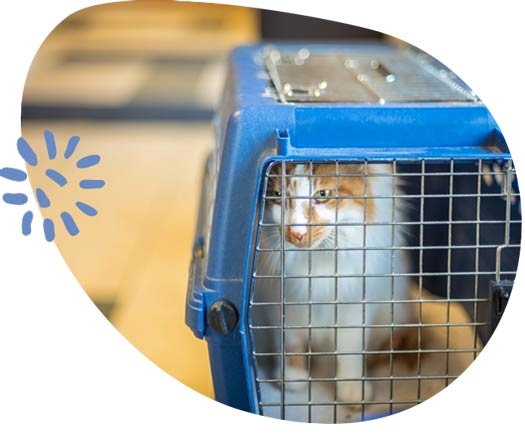 Flying with your pet commercially — regardless of whether they’re small enough to travel in-cabin with you or large enough that they’ll have to ride in the cargo bay — comes with a host of strict regulations and conditions. These can be extensive, and you’ll need to do due diligence. If your pet can’t travel in the cabin with you, you’ll need to look into whether your pet will be transported in a temperature controlled environment, whether they’ll be checked on, and so forth.
If you want to get around restrictions and have maximum transparency into your pet’s care and travel conditions (and pay significantly extra for doing so), you can look into pet-optimized air-travel companies like PetJets.com or AirAnimal.com.
Bus or Train
If you’re traveling by bus or commuter train, the key to acclimating your pet is simply a matter of taking lots of practice runs for longer and longer periods. But because the conditions on a bus or train can be far more variable than those of a car or plane, you’ll need to ensure your dog is well-socialized and can feel at ease around other people and other animals.
4. Have an Arsenal of Stress Busters on Hand
For all the preparation and practice you give your pet, some may still feel anxious about travel. The first idea that will occur to many pet parents when traveling with an anxious pet is to sedate them. At Holistic Actions, we generally advise against this practice, though in some cases it may be necessary and you will need to use the HMDM (Holistic Medical Decision-Making) protocol to determine your exact course of action and after-care.
In many cases, anxious pets — provided they are well prepared for travel — can be significantly soothed with what we like to think of as natural “stress busters.” Though different pets respond differently to different stress busters, here are some of our favorites.
- Snuffle/Activity Mats
- Flower Essences
- CBD oil and other related products
- Melatonin
- Nobileton
- Reiki / T-Touch
- Anti-Anxiety Wraps
5. Gather the Essentials
You’re getting so close to your travel date, and it’s time to get everything together for your big adventure! Here are the most essential items to gather together!
- Food and water. For any trip more than several hours long, this should go without saying. If you’ll be with your pet on the road for long stretches, they’ll enjoy a healthy snack or two as much as you do.
- Health/Rabies certificates. Though it’s pretty rare when crossing state lines to be asked for a Rabies certificate, you’ll want to have this just in case. If your pet will be traveling by air, be sure to check exactly which vaccinations might be required to receive clearance.
- Parasite Control. Ensure your pet is free of parasites before travel. Not only are these parasites harmful to your pet, but you also don’t want ticks and fleas and other pests to end up in your car, in a plane, or anywhere else your pet may be.
- Comfort objects from home (favorite toys or blankets, pacifiers, etc.) Give your pet a piece of home to take with them on their travels. The familiar shapes, textures, and smells of their favorite things will help them feel more at home, wherever they are.
- Back-up collars, leashes, and tags. These things can too often be lost or misplaced or simply left behind on your travels. Having back-ups on hand means that if something goes missing, you can instantly solve the problem. You also minimize the time and risk of your pet not wearing identifying information or being off-leash in unsafe areas.
And there you have it! Everything you need for a safe, happy travel adventure with your furry friend! Good luck, godspeed, and happy “tails”!
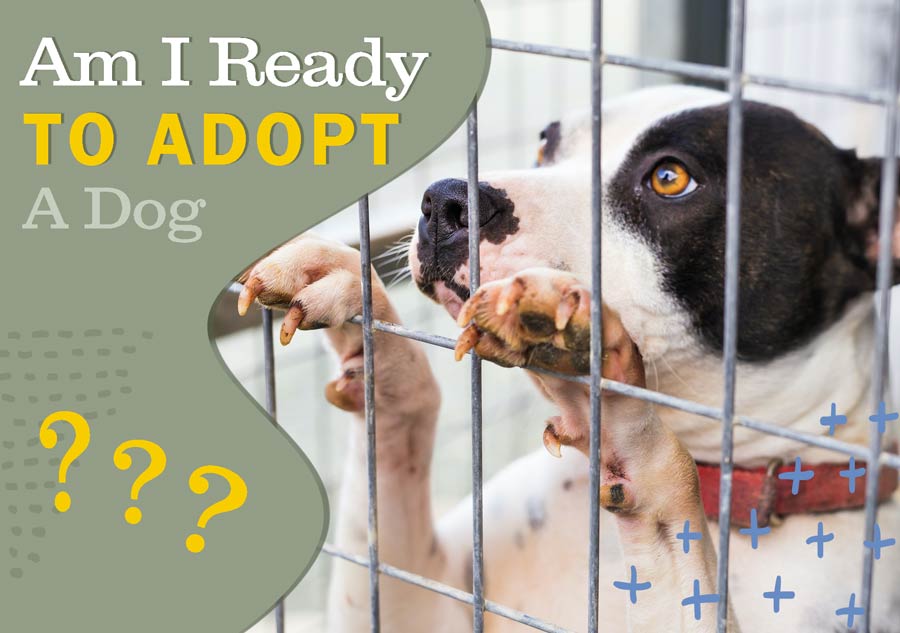
Dreaming of Adopting a Dog? Push “Paws” Till You’ve Considered These Five Crucial Questions
Aw, doggies. They tug at your heartstrings. Sometimes all you have to do is see a puppy in the park or an adoption ad from your local animal shelter to make you feel sure that you simply must get a dog of your own! But not so fast, speed racer! Adopting a dog is a huge deal — a way bigger deal than you might have been led to believe. This article will explain why, and help you ask some of the most important questions you need to consider before bringing home an adorable doggie of your own. Ready to get started? Let’s go!
1. How am I doing?
How are you doing? While this seems like a simple enough question, and one which people are likely to ask us every day, we’ve been socially conditioned to answer “fine,” even when things are not so fine.
So, let’s try this again. How are you really doing? How are you feeling these days, on the inside? Do you have family and friends that you feel actively supported by? Do you have people in your life that really have your back? If you’re struggling, how kind and compassionate are you able to be with yourself vs. criticizing or blaming yourself?
The reason it’s important to ask these questions is that dogs require exceptional levels of emotional energy and investment, patience, and understanding, especially when they’re transitioning to a new environment. When they’re being acclimated to their new home and house rules, it’s imperative that you train them with positive reinforcement rather than punishment.
If you’re not at a place in your life where you’re either emotionally well-resourced or are not yet able to be kind and compassionate with yourself, you may want to work on getting yourself to a better place before you adopt a dog.
But wait, you might be thinking, many people who aren’t really doing okay adopt dogs for this very reason. I was hoping that by adopting a dog, things might actually get better for me. And even though I’m struggling, I know in my heart that I can be a good, responsible pet parent.
If anything like this is going through your head, good for you. There are exceptions to every rule. You don’t necessarily have to be the picture of mental health to be an amazing pet parent, but you do need to be really, really honest with yourself about your ability to meet your pet’s emotional, social, and physical needs. And as the rest of this article will show, in addition to how you’re doing personally, there are other equally important questions to be considered before making the Big Decision.
2. Am I making an informed decision about breed, and can I accept and embrace my dog for who they are?
One of the worst things that we human beings can experience is not being accepted for who we are. When somebody tries to change who we are to suit their tastes, it can run the gamut from annoying to devastating.
When you adopt or rescue a dog, it’s helpful to identify their breed or mix since this sheds light on their temperament and behavioral tendencies. When it comes to breed, you never want to try to “train the dog out of the dog.” For example, no matter what you do, virtually all Border Collies will want to herd things and be given a job.
Breeds are to dogs what different “personality types” or are to people. For example, in the Myers Briggs Personality Types, you might be an Advocate, a Commander, a Mediator, an Adventure, or any one of the 16 different types. This doesn’t mean that there’s not a lot of flexibility within a human personality type or dog breed, but it does mean there are strong tendencies that need to be honored, championed, and worked with rather than against.
Just like different human personality types, different dog breeds have different strengths and weaknesses. When you identify the breed/mix of your dog, you have additional insight into their temperament and abilities and what you can reasonably expect of them. Just as with a human partner, when you can accept and celebrate your dog for who they are — in both their breed tendencies and unique individuality — you’ll have a much healthier and happier experience together!
3. How much free time do I have for holistic pet education and recreation?
Let’s talk education and recreation. Though they seem to be the opposite, they have everything to do with each other when it comes to adopting a dog. Let’s take the education part first.
There is a lot of misinformation about the best ways to feed and care for your dog. Certain routine practices — especially when it comes to feeding your pet — can decrease the vitality and balance of your pet’s system. (And when vitality and balance are compromised, your pet is much more vulnerable to developing allergies, has lower immune resilience, and increased chronic health conditions, and all forms of dis-ease that disrupt their lives and wellbeing.

The Holistic Actions! website exists to provide comprehensive education about ways to feed, train, treat, and care for your pet to give them the happiest, healthiest, and longest life possible. The principles behind holistic petcare aren’t difficult to understand and can be incredibly gratifying and even enjoyable to learn about. But because the approaches of holistic petcare run counter to much of conventional (reductionistic) thinking, it does require an open mind and the willingness to become educated. (As a side note, educating yourself about canine nutrition and learning to feed your dog a fresh diet that you prepare for them at home — is the number one thing you can do for protecting, improving, and sustaining their health.)
Now that we’ve covered the education part, let’s turn to recreation. Dogs of all ages need opportunities for outdoor exercise and enrichment activities to ensure healthy emotional, social, and physical development. This may be a vigorous game of fetch or a leisurely sniff walk.
Fresh air and sunlight promote cellular vitality, and regular “sniff walks” allow your dog to explore the hundreds of different scents they encounter. A considerable amount of the canine brain is devoted to their sense of smell. Even though we can’t appreciate the complexity of what they are sensing with their fabulous noses, we know that stimulation of these olfactory centers contributes significantly to canine development and overall wellbeing.
To sum up, for dogs to be truly healthy and happy, they need high levels of active engagement from you and lots of exercise. So the question here is twofold. First, do you have sufficient free time to spend with your dog to ensure they’re getting adequate social contact? Second, are you willing to ensure your dog gets outside at least twice every day for fresh air, sniffing and exercise?
4. Are you prepared for courtship?
There’s a reason that human beings go through a relatively lengthy dating phase of their relationship before deciding to get married. Before saying “I do” and making a lifetime commitment to adopting or rescuing a dog, it’s a good idea to have a period of courtship through short-term hosting or fostering. This gives you a chance to see how you do together before getting intensely emotionally involved. It’s especially advisable if there are other pets in the household to consider.
Once you’ve made your decision, preparation is a necessity. Even if you adopt or rescue an older dog, they still need to navigate a huge transition to a new home and will take some time to get their mental and emotional bearings. Imagine you went to live with a new family and were expected to be almost instantly “adjusted.” Humans need time to settle into a new groove, and the same is true for dogs.
No matter the dog’s age you adopt or rescue, they need time to adjust, much as a new puppy does. The first 2-3 months “define” the relationship status and “pack order” in the dog’s mind. With your leadership and guidance, along with good management, they will start to understand how this new home works, and you’ll begin to see their true personality shine.

5. Can I afford it?
The cost of adopting and caring for a dog is estimated to range anywhere from a rock-bottom $650 for the tiniest dogs to $2,115 a year for the largest. (And by the way, that’s without things like basic medical care, emergency vet visits, pet training support, pet grooming, pet-sitting costs, and pet luxuries that many pet parents actually view as necessities.)
The majority of pet parents don’t have a budget, and it’s important to take stock of whether you have the financial resources to support the everyday care needs of your dogs. If your answer is yes, there’s actually a second question that’s just as important to ask. That question is whether you have the resources to deal with unexpected and potentially costly medical care. (It’s easy — especially when getting a puppy — to assume you’re years away from needing significant medical care. While this is a reasonably safe bet — provided you’re feeding your puppy a fresh food diet that you prepare at home and they’re getting plenty of fresh air and exercise — it’s also not a gamble you should be too quick to make.)
Trust that you and the dog will fatefully find your way together, in just the right time, and in just the right way.
Now that we’ve come to the end of this article, maybe you have an even better understanding of why adopting a dog is such a big deal. If you can answer yes to all five questions, it’s probably the perfect time to adopt or rescue a dog. If you can’t answer yes to these questions, that’s okay. Be confident in your ability to slowly but surely get yourself to the place you want to be. Trust that you and the dog will fatefully find your way together, in just the right time, and in just the right way. Maybe your dog is already out there waiting for you to be ready, or maybe they’re not even born yet. Whatever the case, if you move forward with faith in yourself and faith in the future, it will be only a matter of time before you and the doggie of your dreams are at last united!