
Ahhhhh. We all know that feeling: the feeling of taking a deep sigh of relief, or experiencing a deep state of contentment. But what’s easy to miss is how intimately connected this experience is to breathing. That’s why in this article, we’re going to help you see how breathing, health, and happiness go together in powerful and surprising ways. (Ways that can make a world of difference for you and your pet!)
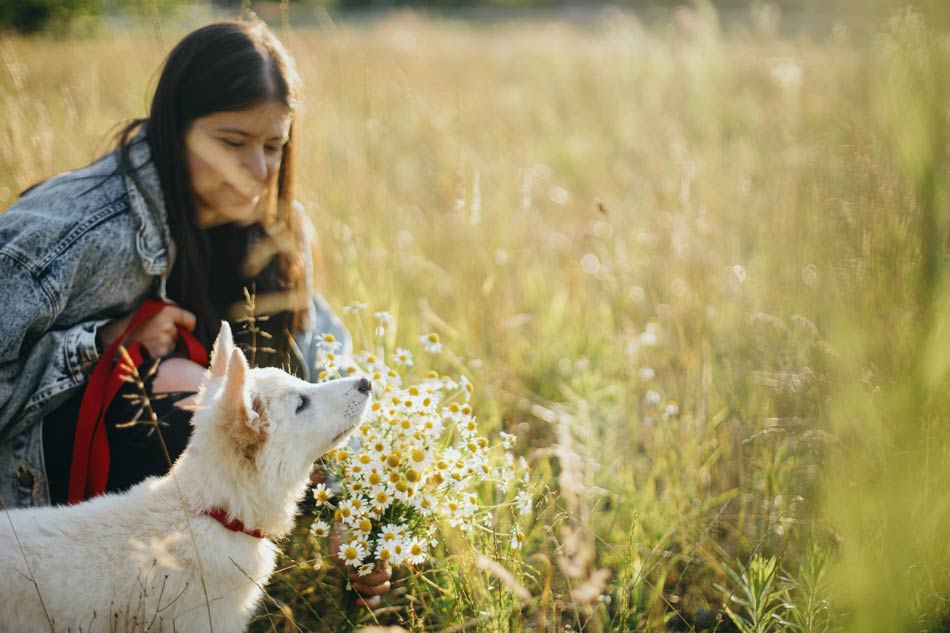
If you’re a health-conscious pet parent, you already know that high-quality nutrition and abundant exercise play a foundational role in keeping your doggie or kitty happy and healthy, and their BEAM (Behavior, Energy, Appetite, and Mood) in tip top shape. But what you may not know is that “pet pranayama” (exercises and activities that promote better breathing) also play an incredibly powerful role in their health.
While this may sound surprising, it’s only because most of us haven’t had the opportunity to learn about how the quality of our oxygen intake plays a huuuuge role in regulating, nourishing, balancing, and vitalizing nearly every aspect of a pet’s (or person’s) system!
Power Of Breathing
Pranayama /ˌpränəˈyämə/ (in Hindu yoga) is a practice of breath regulation and has been understood since ancient times as a central pillar of caring for body, mind and spirit. But only relatively recently has modern science begun to recognize the extraordinary power of breath and appreciate the amazing health benefits it holds for both pets and people.
Why is breath enhancement so powerful? Just as food is a source of fuel and sustenance for our bodies, so is oxygen. Oxygen, of course, is our MOST vitalizing fuel source (perhaps this is why lung capacity is known as “vital capacity.” ) Breathing is so vital to life that while we can live for many days without food, we can live for only minutes without oxygen.
When living creatures like us and our pets are able to take in and better utilize oxygen, it increases cellular energy and activates our parasympathetic response. The parasympathetic response helps rest, relax, and restore, allowing our system to feel, function, and perform better. While our emphasis in this article will be on how pranayama impacts dogs and cats, keep in mind that all the benefits of this amazingly powerful practice apply equally to you!
The Well-Documented Benefits of Pet Pranayama
Like we said at the beginning of this article, modern science is rediscovering the remarkable benefits of pranayama. Books like, Breath: The New Science of a Lost Art, as well as Heart, Breath, Mind: Train Your Heart to Conquer Stress, are inspiring and easy-to-understand introductions to why and how breath-enhancing exercises and activities produce such profoundly positive effects.
…pet pranayama can improve just about any health challenge with which your pet may be struggling.
By increasing oxygenation and cellular energy (the central form of energy our body relies on for health and healing), pet pranayama can improve just about any health challenge with which your pet may be struggling. And because it activates your pet’s parasympathetic response, it also increases their sense of wellbeing and makes a noticeable difference in their immune resilience, ability to heal and quality of life!
This means that pranayama-promoting exercises and activities translate to greater health and happiness across behavior, appetite, energy, and mood (BEAM.) But how and why does better breathing promote health, healing, and happiness and lead to better BEAM? Research now shows that pranayama…
- Helps normalize liver enzymes and red and white blood cell count
- Enhances immune response (greater ability to defend against pathogens)
- Enhances homeostatic regulation and stability (better systemic balance)
- Decreases reactivity to environmental and endogenous toxins
- Improves sleep and digestion
- Improves heart health and kidney function
- Improves mitochondrial function
- Increases respiratory function and lung capacity
- Enhances cognition (and helps counteract cognitive decline in older pets)
- Improves biomarkers for cellular activity
- Reduces stress
- Elevates mood
- …and much more!
A Truly Mind-Blowing Article on Pet Pranayama
As a vet and molecular biologist and expert in the field of holistic veterinary medicine, Dr. Jeff Feinman has published on the benefits of pranayama in pets. Although this paper is intended for an academic audience, if you’re inclined to check it out, it’s pretty mind blowing. If you’d like to see a brief excerpt, check out the italicized print below, otherwise just skip ahead to the next section!
Therapeutic use of pranayama for pets, similar to the use of Ayurveda in people, is relatively easy to implement because breath control is already innately used by pets for communication and calming.
There are several physiological uses for breath control that are known to improve quality of life and reduce problems such as fear, aggression, and separation anxiety. One specific clinical application of this is a behavior modification protocol in which the anxious pet is taught to slow his breathing to help induce calm.
This clinical protocol can be extremely useful for pets with chronic behavioral problems when trained over time. In addition, pets that suffer acutely, such as hyperventilating and panting cats, may also benefit.
Wow, right? (And Dr. Jeff goes on in this paper to address and document dozens of scientifically verifiable benefits of pet pranayama.)
Fun, Easy, Practical Pet Pranayama Exercises and Activities
In addition to doctors we think it’s super important to reach pet parents to bring the benefits of pet pranayama to as many dogs and cats as possible. That’s why we also share articles like this one about the fun, easy, practical, breath-enhancing exercises and activities we’ll introduce you to below!
Therapeutic Sniff Walks
Sniff Walks are a big, big deal and are beginning to become better known in the veterinary mainstream. More than any other breath-enhancing exercise or activity you can do with your pet, this one may be the most important for at least two reasons. First, no indoor sniff activity can compete with the diversity of scents, environmental connection/engagement and beneficial microorganisms found outdoors. Second, exposure to fresh air and sunlight are great ways to promote better BEAM.
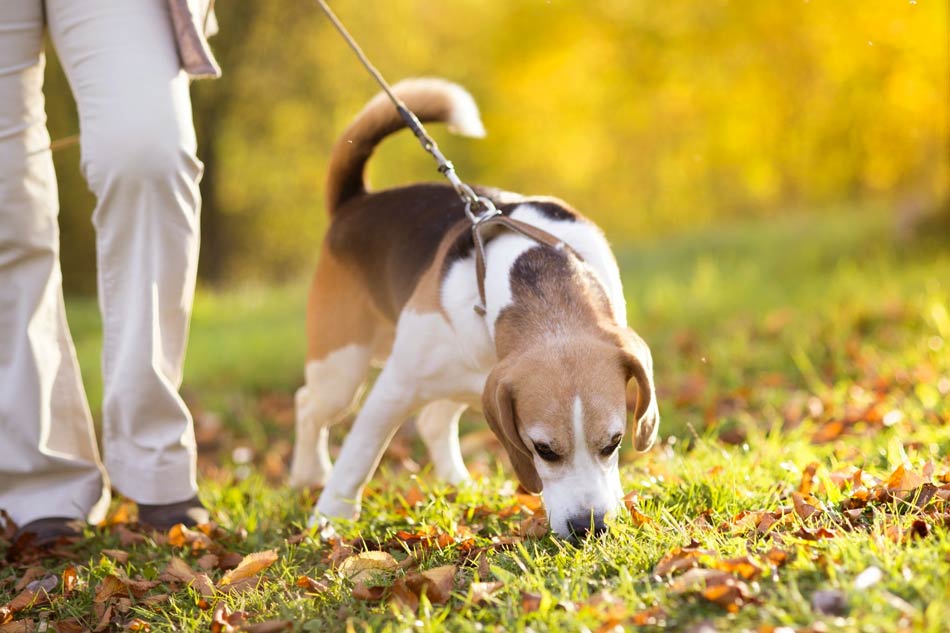
So, how does a sniff walk differ from a regular walk? With regular walks, you’re in charge, whereas with a sniff walk, you allow your dog or cat to lead the way. Either on a loose leash or off-leash (providing you’re in a safe and secure area, of course.) This allows them to be self-directed, explore scents at their leisure, take in many more scents and get the benefit of each one much more deeply than they could if you were hurrying them along on a brisk exercise walk.
The great thing is that slowing down can benefit both you and your pet, helping you to “stop, relax, and smell the roses.” (Or the grass, dry leaves, or whatever the case may be.) Dr. Dacher Keltner from the Greater Good Science Center of Berkeley University calls these “Awe Walks”. While you walk and “paws” together, keep the leash in the shape of a smile (not taut) so your pet can easily investigate whatever scents attract their attention and check their “pee mail.” (Dogs and cats are exceptionally interested in scent-based signs that indicate another animal has been in the area.)
Snuffle Mats
For those of you who aren’t familiar with a snuffle mat, it basically looks exactly like a shag-style rag rug with a very deep pile. As far as your dog or cat is concerned, a snuffle mat is a wonderland of scents and a place where hidden treasures (strategically concealed treats) can be found.
Snuffle mats can provide hours of indoor fun on any day, especially when you can’t make it outside for a sniff walk. Snuffle mats promote prolonged sniffing and are generally so irresistible that they can even be used to encourage standing and walking. (With senior pets or dogs struggling with health challenges that make it difficult to perform these movements.)
Some of our favorite non-toxic snuffle mats include the Paws5 and CleanRun. (And if you’re a DIY champ, you can even make one at home by following these instructions!) As for the “treasures” that you hide inside the snuffle mat, freeze-dried meat treats (especially heart) broken into very small pieces work great. (You can also try sunflower or pumpkins seeds or experiment with your pet’s favorite foods). Remember to make these treats teeny tiny, both because you want them to be difficult to find and because the goal is for your pet to sniff, not necessarily to eat.
Snuffle mats (and all exercises and activities that promote pranayama) can be so therapeutic that they can offer remarkable quality-of-life enhancement for even seriously ill dogs. Take the case of Koby, a 15-year-young pup with severe, end-stage heart dis-ease. Despite Koby’s challenges, the introduction of sniff activities and multiple snuffle mats dramatically enhanced his happiness and quality of life.
Hide and Go Treat
Snuffle mats aren’t the only place you can play “Hide and Go Treat” with your pet. Hiding or broadcasting treats around your house or yard (including in the snow) for your pet to find will be a huge hit with both dogs and cats. (Can you imagine how cool it would be if somebody was routinely hiding some of your favorite things around your house or yard for you to discover?!)
Of course, when you hide treats, make sure to hide them in places your pet will actually be able to find and eat them. (Otherwise, in the days and weeks that follow, you’re liable to find moldy treats, or even mice!) Hide and Go Treat is really a pranayama activity to play with your pet. Start off by encouraging them to look in certain places, and congratulating them when they hit kitty or puppy pay dirt! You can also use this therapeutic game to stimulate a cat’s hunting reflex to help them connect and engage with their environment.
“Purrayama”
For cats, purring is pranayama. There are many fascinating theories on why cats purr, but what seems apparent is that cats purr not only to express pleasure and happiness, but also to regulate and restore their system. Purring may be accompanied by an increase in endorphins and parasympathetic stimulation that potentiates a cat’s innate healing ability. All of this is more than enough reason to spend some significant time each day making your cat purr. Whether that’s through petting, playing, or offering them catnip or silvervine, purring is as good for you as it is for them!
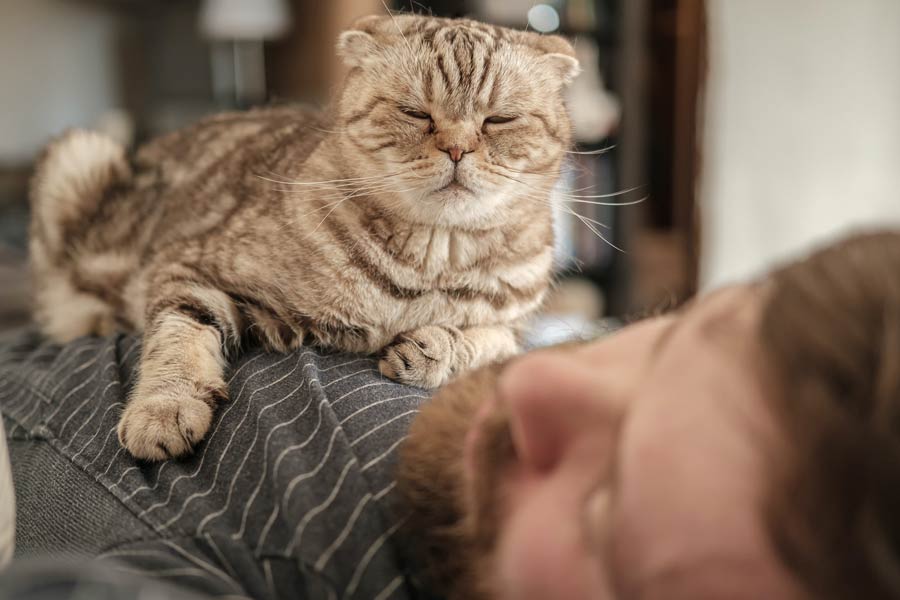
In humans, purring/humming has been shown to stimulate the vagus nerve (that’s a super good thing), even if your cat just purrs while you hold them against your chest. A cat purrs within a range of 20-140 Hz and this frequency and vibration seem to activate your parasympathetic response to the point that studies have shown that it can decrease symptoms of dyspnea (shortness of breath), reduce swelling, and promote healing in bones and soft tissue. How’s that for an incentive to spend some extra time with your fuzzy, cuddly, magical, personal healing machine?
Ready to Put Pranayama Into Practice to Reap Its Amazing Benefits?
Take a deep breath and notice how ordinary-yet-extraordinary it is to feel oxygen entering your lungs, allowing yourself to exhale with a sigh of gratitude for the gift of breath. Now, from this place of presence, prepare to put pranayama into practice. To make it even easier, we’ve created this little list to help you begin.
- I will order a snuffle mat on _________ (When, exactly?)
- I will take my dog on a sniff walk ________ (When, where, and for how long?)
- I will pet my cat for ________ (For how long? When?)
- I’ll set up a Hide and Go Treat hunt for my pet on (What day? With what treats?)
And because we don’t want you to be left out from practicing pranayama…
- I will take 5 deep breaths, doing my best to bring the spirit of care, curiosity, and compassion to each one when I am _______ (First waking up? Feeling especially stressed? Taking a shower? Getting ready for bed? It’s completely up to you!)
Ahhhhh. See? Now that we’ve come to the end of this article, isn’t it easier to see how breathing, health, and happiness go together in powerful and surprising ways? And we just touched the surface…
We hope this article has been instructive, illuminating, and inspiring to you! If you would like professional guidance in optimizing your pet’s health or successfully treating a veterinary health challenge, our team at Holistic Actions! can help.