

WELCOME TO THE SKIN
RESOURCES SECTION
Noticing something about your pet’s skin or fur that concerns you? You’ve come to the right place!
Just like with humans, an animal’s skin is the largest organ of their body, and as such, can offer clues to the state of their internal balance and overall health. We may say skin dis-eases are “caused” by allergies or other conditions; this fails to address the question of what causes allergies and other conditions in the first place.
Any dis-ease your pet may experience is an expression of an underlying balance in their system. Balance (or lack thereof) involves many different factors, including diet and nutrition, exercise and activity levels, socialization and current care environment, genetics, history of vaccination and exposure to toxins, and more. When each of these factors are optimized, your pet has a much better chance of having a balanced system. A balanced system is a strong, stable system with high immunity to disease. For this reason, symptoms of any kind (including skin symptoms, allergy symptoms and so forth) are an alarm that it’s time to rebalance your pet’s system. As balance is regained, symptoms naturally disappear or are dramatically reduced.
To help your pet regain their balance to resolve or reduce their skin issues, you’ll first need to become a pet detective. By learning to look at your pet’s symptoms as valuable clues for guiding holistic actions, you’ll get to the root cause of the trouble, increase your pet’s resistance to all forms of dis-ease, and give them the happy, healthy life they deserve.
Ready to start sleuthing? Let’s begin!
1. What symptoms might I expect to see if my pet is suffering from some form of skin dis-ease?
Itch is the #1 symptom you can expect to see with allergy-related skin-disease secondary to a compromised immune response. Itchiness can seem to “come out of nowhere”, leading to changes in the skin due to self-trauma from biting or scratching. Skin conditions resulting from self-trauma include hair loss, inflammation, thickening, color change, or a secondary infection like bacteria or yeast.
Let’s list the symptoms of skin inflammation, both primary, from the skin disease, and secondary, from self-trauma:
- Itch
- Hair loss (alopecia)
- Papules (raised bumps)
- Pustules, blisters, or hives (urticaria)
- Crusts or scaly skin
- Bloody or purulent (pus) discharge
- Odor
- Redness or discoloration
- Thickening of the skin
If you’re noticing any of these symptoms, you will also typically see changes in at least one aspect of their BEAM. (Beam stands for Behavior, Energy, Appetite and Mood). Generally speaking, the more changes you’re seeing across BEAM, the more severe your pet’s underlying issue may be.
Do take careful note of your pet’s symptoms, when they occurred, their location and severity, and especially what makes them better or worse. This will help your holistic vet help you to address your pet’s problems.

2. GMOs and Skin Dis-ease
The presence of GMO (genetically modified foods) and chemicals in food can damage the GI tract causing a leaky gut and skyrocketing food sensitivities. Up to thirty percent of pets can have at least one sensitivity to a certain food, making multiple food sensitivities very common. Although the appearance of symptoms may be sudden and seem to come “out of nowhere,” you can be sure that an imbalance has been building for some time. Once symptoms appear, a “tipping point” has occurred, and you’ll want to take holistic actions without delay.
GMO foods are present in almost all commercially prepared pet foods and are found in 75 percent of processed food and 90 percent of all soy. Cows, chickens, pigs, and even fish are fed these foods, which in turn are fed to our pets. GMOs can have a toxic effect on the GI tract, causing inflammation and “leaky gut syndrome,” increasing food sensitivities.
These food sensitivities express themselves in both cats and dogs (and often in humans) as itching. Cats may have a sudden onset of itching, often concentrated at the head and neck. Dogs are more likely to have a sudden onset itching anywhere on their body. These reactions often occur in relation to a certain food the animal has been eating for some time, and their itching often isn’t responsive to steroid treatment. It is important to find and eliminate the trigger food or substance (such as exposure to household or environmental toxins) to lessen the toxic stress on the liver, spleen, and GI tract. This approach will provide your pet short term relief while you work on helping them regain their balance in the long term. 
3. Are there any tests I can run for determining if my pet has food sensitivities vs a food allergy?
The “gold standard” to determine if your pet has a food allergy can be run at home. You can do this by eliminating foods from the diet for at least 4-6 weeks. If their itch resolves or improves, try adding the good back to see if the itch or other skin symptoms (like irritation around the head of kitties) returns. If it does return, don’t worry! Just re-eliminate the trigger food and the itch and skin symptoms should resolve. When running an elimination diet to test how your pet responds to the removal of certain foods from their diet, it’s important to track the amount of time between the removal of a particular food and the reduction or disappearance of itchiness. If it subsides fairly quickly, it is likely a food sensitivity and not an allergy which is more common and makes it likely that you’ll be able to reintroduce the food later on if you’ve also been working on their internal balance using homeopathy or Traditional Chinese Veterinary Medicine (TCVM). There are other diagnostic tests to help determine if your pet has food sensitivities including the Nutriscan saliva test, and blood tests (which are not very accurate).
4. What holistic actions can I take on behalf of treating or managing my pet’s skin dis-ease?
There are three main approaches that work well in tandem when addressing your pet’s skin dis-ease: optimized nutrition, restoration of the “hypothetical” immune imbalance using homeopathy and TCVM and topical support.
Optimized Nutrition
Of all the holistic factors that contribute to your pet’s inner balance — diet and nutrition, exercise and activity levels, socialization and current care environment, genetics, history of vaccination and exposure to toxins, and more — diet and nutrition have the greatest impact. If you want to resolve or dramatically improve your pet’s skin dis-ease, you need to focus on optimizing their diet.
An optimized diet begins with the elimination or reduction of canned and dry pet foods, replacing them with a wide variety of fresh foods and select nutritional supplements. If your pet has been treated with anti-biotics, it will be especially important to introduce pro-biotics to their diet to help repopulate their system with beneficial bacteria.
Minimally processed food is the best choice for your pet. Cellular vitality — the foundation of true health and high immunity — is most powerfully enhanced by raw food, followed by cooked food. Commercially prepared canned food and dry kibble rank much lower on the vitality scale. To learn more about the Food Vitality Scale to get an even better idea for how to optimize your pet’s diet, check out our fresh feeding page.

Internal Energetic Optimization
Current conventional veterinary medicine does NOT recognize any internal energetic balance. However, many holistic vets feel that true healing requires restoration of this inner balance. Natural treatment methods (modalities) help our animal companions achieve this balance, or homeostasis. Guardians should closely observe and record their companions’ signs and symptoms which will help point us toward the most helpful treatment method, and show your pet’s response. These observations about symptom changes are especially important in choosing appropriate homeopathic medicines.
Topical Support
You can often immediately relieve or reduce your pet’s itching with an aloe vera or oatmeal shampoo treatment. You can help relieve their itching with spot treatment using black tea, aloe vera gel, colloidal oatmeal soaks, and even a combination of baking soda paste and Rescue Remedy cream. Some acupressure points and essential oils, such as discussed on the AnimalEO site may be helpful as well.
You can give your pet a body-rinse composed of solution of water, lemon juice, apple cider vinegar, and green tea. If your pet has itchy ears, some topical treatments are aloe vera, black tea, almond oil, Zymox without hydrocortisone, herbal cleaners, and a solution of one part water and one part white vinegar. Never introduce large amounts of any topical solution forcefully into your pet’s ear. Either instill the product slowly in small amounts, dip a sterile cloth into the solution, wring it out, and apply to the affected area. To help with the anxiety that often accompanies itching, use essential oils, flower essences or essence combinations similar to Rescue Remedy.
DOWNLOAD
Skin Handout
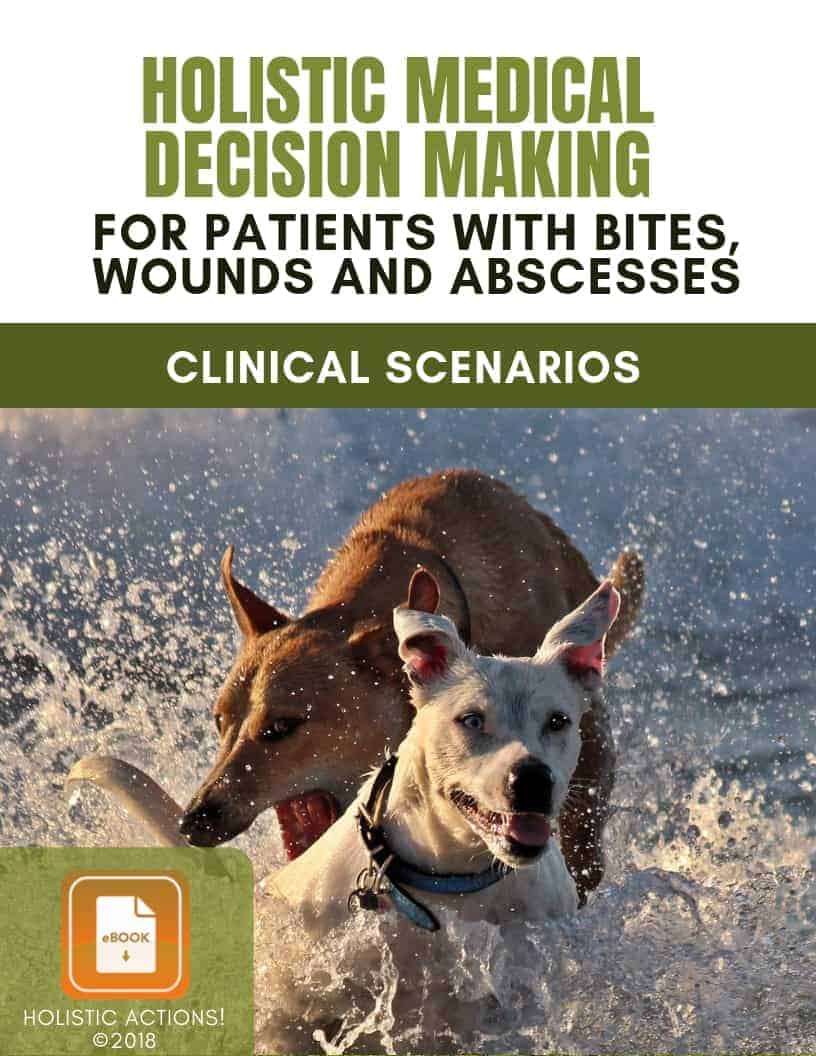
EBOOK: HMDM FOR PATIENTS WITH BITES, WOUNDS AND ABSCESSES
As a part of Vitality and Homeopathy course, it takes you through Holistic Medical Decision Making Process in bite, wound and abscess cases.
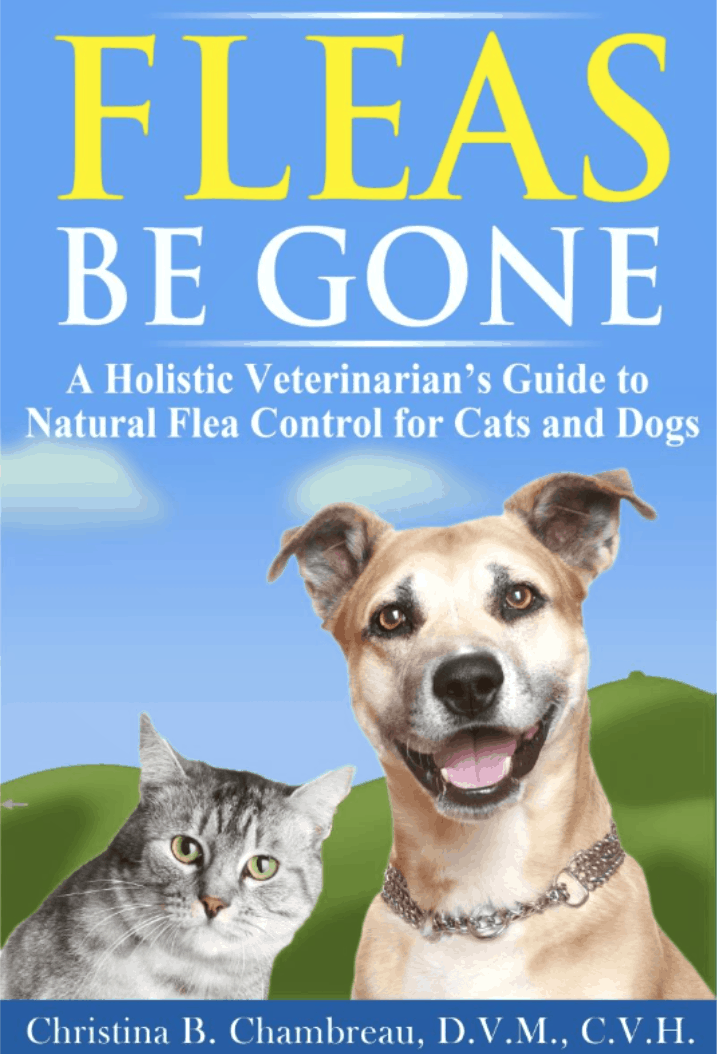
A holistic veterinarian’s guide to natural flea control for cats and dogs – a comprehensive ebook by dr. Christina Chambreau.
ARCHIVE
Skin Webinars
All the Pet Health webinars! below cover aspects of skin.
Read the descriptions and topic lists next to the videos to find your topics of interest.
12/10/18 Empower Hour! Bites
SUMMARY: Tonight's session started with a discussion of how to help your pets with bite wounds of all kinds. We started with the use of Apis after insect stings...
6/18/18 Empower Hour! Organon Paragraph 3
Organon Paragraph 3 was discussed tonight. This one paragraph summarizes how you can treat your pets using their vitality, balance and homeopathy.
5/14/18 Empower Hour! Heart Health & Q&A
Focus on cardiomyopathy – deeper dive into the home heart health exam, heart rate and pulse, monitoring of the EKG.
ARCHIVE
Flea Webinars
All the Pet Health webinars! below cover aspects of flea.
Read the descriptions and topic lists next to the videos to find your topics of interest.
No Results Found
The page you requested could not be found. Try refining your search, or use the navigation above to locate the post.
BLOG
No Results Found
The page you requested could not be found. Try refining your search, or use the navigation above to locate the post.
ARTICLES
Skin Autoimmune- Exfoliative Cutaneous Lupus Erythematosus [Article]
Skin Bacteria- Atypical Mycobacteriosis [Article]
Skin Cancer- Cutaneous(Epitheliotrophic) T- Cell Lymphoma [Article]
Skin Cat Feet- Plasma Cell Pododermatitis In Cats [Article]
Skin Infection- Deep Bacterial Pyoderma And Furunculosis [Article]
Skin Parasite- Demodicosis In Dogs [Article]
Skin Parasite- Flea Allergic Dermatitis [Article]
Skin Parasite- Sarcastic Mange [Article]
Skin Parasite-cheyletiellosis [Article]
Skin Ringworm- Dematophytosis [Article]
Skin Tumor- Perianal Tumors [Article]
Skin Tumors- Benign Skin Tumors In Dogs [Article]
Skin- Acne In Cats [Article]
Skin- Acute Moist Dermatitis In Dogs [Article]
Skin- Alopecia X [Article]
Skin- Atopic Dermatitis In Dogs [Article]
Skin- Claw (Toenail Disease, Asymmetrical [Article]
Skin- Claw(Toenail) Disease, Symmetrical [Article]
Skin- Cutaneous Or Discoid Lupus Erythematosus [Article]
Skin- Sebaceous Adenitis In Dogs [Article]
Skin- Cyclical Flank Alopecia [Article]
Skin- Eosinophilic Granuloma Complex In Cats [Article]
Skin- Food Reactions, Adverse [Article]
Skin- Juvenile Cellulitis [Article]
Skin- Malassezia Dermatitis [Article]
Skin- Pemphigus [Article]
Skin- Perianal Fistula [Article]
Skin- Primary Seborrhea [Article]
Skin- Skin Fold Pyoderma [Article]
Skin- Sporotrichosis [Article]
Skin- Superficial Bacterial Folliculitis In Dogs [Article]
Skin- Systemic Lupus Erythematosus: Dermatologic Aspects [Article]
Skin- Vitamin A Responsive Dermatosis [Article]
Skin- Zinc Responsive Dermatosis [Article]
Clinical and histological evaluation of an analogue of palmitoylethanolamide
Ringworm info from a vet derm
FORUM
coming soon